
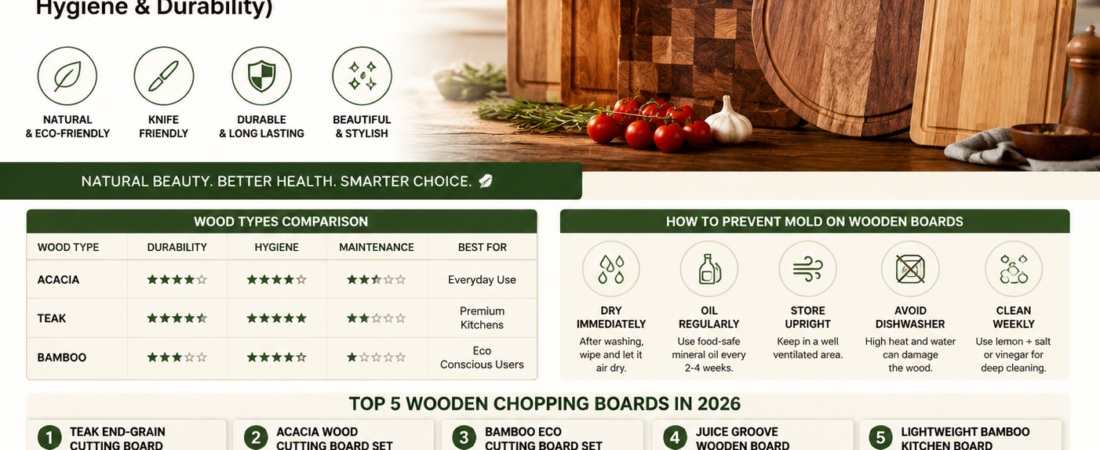
Below are carefully selected boards based on durability, hygiene, design, and user reviews.
🥇 1. Teak End-Grain Cutting Board
⭐ Best Overall Premium Choice
Features:
- Naturally oil-rich teak wood
- End-grain structure (self-healing surface)
- Highly resistant to moisture
- Heavy-duty stability during cutting
Pros:
✔ Extremely durable
✔ Hygienic compared to cheap wood
✔ Long lifespan (5–10 years+)
Cons:
✖ Expensive
✖ Heavy
👉 Best for: Serious home cooks and long-term use
🛒 Affiliate Tip: Check premium teak boards on Amazon
🥈 2. Acacia Wood Chopping Board Set
⭐ Best Value for Money
Features:
- Natural acacia hardwood
- Lightweight design
- Comes in multiple sizes
- Knife-friendly surface
Pros:
✔ Affordable
✔ Durable
✔ Stylish wood grain
Cons:
✖ Needs regular oiling
✖ Can crack if not maintained
👉 Best for: Everyday home cooking
🛒 Available on Amazon
🥉 3. Bamboo Eco Cutting Board Set
⭐ Best Eco-Friendly Option
Features:
- Fast-growing bamboo material
- Lightweight and eco-friendly
- Smooth surface finish
Pros:
✔ Sustainable choice
✔ Affordable
✔ Easy to handle
Cons:
✖ Can absorb moisture if not dried properly
✖ Shorter lifespan than hardwood
👉 Best for: Eco-conscious users
🥄 4. Juice Groove Wooden Board (Acacia)
⭐ Best for Meat & Fruits
Features:
- Built-in juice grooves
- Prevents mess during cutting
- Thick hardwood structure
Pros:
✔ Great for juicy foods
✔ Strong build
✔ Easy cleaning
Cons:
✖ Slightly heavier
👉 Best for: Meat and fruit preparation
🧺 5. Lightweight Bamboo Kitchen Board
⭐ Best Budget Pick
Features:
- Thin and lightweight
- Easy storage
- Basic cutting surface
Pros:
✔ Cheap
✔ Portable
✔ Beginner-friendly
Cons:
✖ Not for heavy-duty use
✖ Needs careful maintenance
⚠️ Why Wooden Boards Get Moldy (Important)
Many users face this issue — but it’s not the wood’s fault alone.
Main causes:
- Leaving board wet after washing
- Storing in closed damp areas
- Using low-quality untreated wood
- Not applying oil protection
🧼 How to Prevent Mold on Wooden Chopping Boards
Follow these simple rules:
✔ 1. Dry Immediately
Never leave wooden boards wet after washing.
✔ 2. Use Food-Safe Oil
Apply mineral oil or coconut-based board oil every 2–4 weeks.
✔ 3. Store Upright
Let air circulate around the board.
✔ 4. Avoid Dishwasher
High heat + water = cracking and mold risk.
✔ 5. Deep Clean Weekly
Use:
- lemon + salt scrub
- vinegar wipe
⚖️ Wooden vs Plastic vs Stainless Steel
| Material | Hygiene | Durability | Eco-Friendly |
|---|---|---|---|
| Wood | Medium | High | Yes |
| Plastic | Low | Medium | No |
| Stainless Steel | High | Very High | No |
👉 Wooden boards remain the best balance of natural + practical use
🧠 Final Verdict
If you want the best long-term wooden chopping board in 2026, go for:
🥇 Teak end-grain boards (best overall)
🥈 Acacia boards (best value)
🥉 Bamboo boards (eco-friendly choice)
🌿 Final Advice
Wooden chopping boards are not “buy and forget” products. They are living materials that need simple care.
If maintained properly, a good wooden board can last years while staying hygienic, safe, and beautiful in your kitchen.
🔗 Related Articles on NatureBuz
- Wood vs Stainless Steel Chopping Boards: Which Is Safer?
- How to Stop Bamboo Bathroom Products from Getting Moldy
- Best Eco-Friendly Kitchen Starter Kit (2026 Guide)